 561-721-1309 and Toll Free 800-273-1555
If you own a residential pool in Florida, safety isn’t optional—it’s the law. And in 2026, enforcement, awareness, and homeowner responsibility are more important than ever.
But here’s the challenge: most homeowners don’t actually understand what Florida pool safety laws require—they just know they need “some kind of barrier.”
This expert guide breaks it down clearly—no legal jargon, no confusion—so you know exactly how to stay compliant and protect your family.
The Law in Simple Terms (What Florida Really Requires)
Florida’s residential pool safety laws are designed to prevent accidental drownings—especially among young children.
At the core, every residential pool must have at least one approved safety feature, such as:
- A pool safety fence or barrier
- A pool cover that meets safety standards
- Exit alarms on doors and windows leading to the pool
- Self-closing, self-latching doors with proper locks
However, most experts—and safety organizations—agree that a pool safety fence is the most reliable and widely used solution.
What Counts as a “Compliant Pool Barrier”?
Not every fence qualifies. Florida law outlines specific requirements that your pool barrier must meet to be considered compliant.
Here’s what professionals look for during pool fence installation:
✔ Minimum Height
The barrier must be at least 4 feet tall (many homeowners opt for taller for added safety).
✔ No Climbable Gaps
Openings must be small enough that a child cannot squeeze through or climb over.
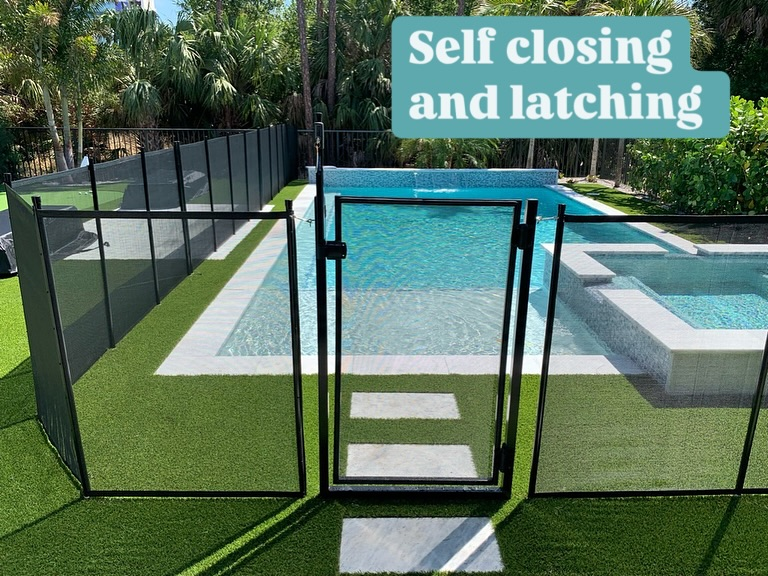
✔ Secure Gate System
- Must be self-closing
- Must be self-latching
- Latch must be out of reach of small children
✔ Proper Placement
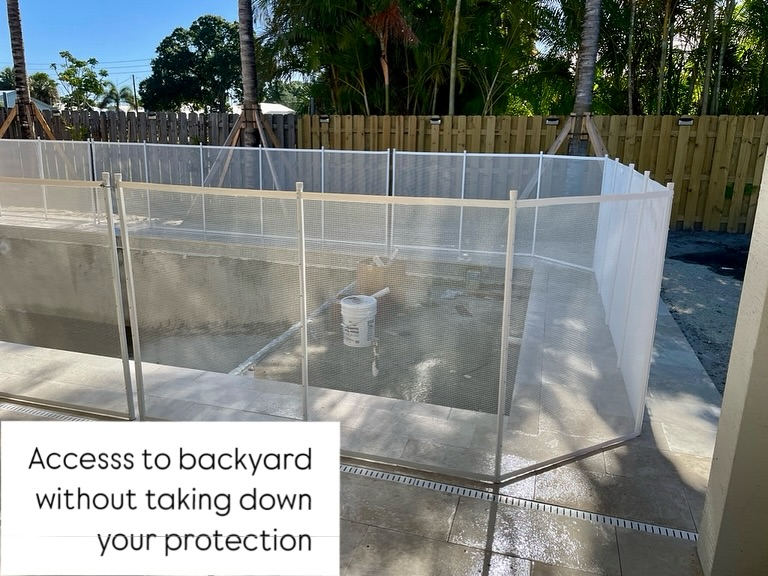
The fence must completely isolate the pool from the home and yard—not just partially block access.
This is why homeowners searching for a pool fence company near you are often advised to choose professionals who understand these technical details.
Why DIY Can Put You at Risk
It’s tempting to buy pool fence online and install it yourself—but here’s where many homeowners unknowingly fall short:
- Incorrect spacing between poles
- Improper gate installation
- Fence not fully enclosing the pool
- Non-compliant height or latch placement
Even small mistakes can mean your pool does not meet Florida law, leaving you exposed to liability and safety risks.
Experienced pool fence installers near you ensure everything is done correctly the first time—no guesswork.
Local Enforcement in South Florida (What Homeowners Should Expect)
Across areas like Boca Raton, West Palm Beach, Jupiter, and Palm Beach Gardens, local authorities take pool safety seriously—especially for new home purchases and renovations.
Inspections often check for:
- Approved barrier installation
- Functional gate systems
- Clear pool isolation
Failing to meet requirements can delay permits, home sales, or renovations.
Why Pool Safety Laws Exist (Beyond Compliance)
It’s easy to think of these laws as just another regulation—but they exist for a reason.
Florida consistently ranks among the highest states for child pool accidents. Most incidents happen quickly and silently, often when supervision lapses for just a moment.
A properly installed pool safety fence creates a physical barrier that prevents access—buying critical time and preventing tragedies.
Expert Insight: What Homeowners Often Overlook
After 20+ years in the field, professionals at Pool Barrier Safety Fence have seen common patterns among homeowners:
- Waiting too long to install a barrier
- Assuming supervision alone is enough
- Choosing cheaper DIY options that don’t meet code
- Not maintaining gates or latching systems
The safest homes are the ones that treat pool protection as a priority from day one—not an afterthought.
FAQs: Florida Pool Safety Laws (2026)
Q1: Do all pools in Florida require a safety barrier?
Yes, residential pools must have at least one approved safety feature, with fences being the most common and effective.
Q2: What is the minimum height for a pool fence in Florida?
The minimum is typically 4 feet, but many homeowners choose taller fences for extra protection.
Q3: Can I install a pool fence myself?
While you can buy pool fence online, improper installation may lead to non-compliance. Professional installation is strongly recommended.
Q4: What happens if my pool doesn’t meet safety laws?
You may face failed inspections, delays in permits or home sales, and increased liability risks.
Q5: How do I find a reliable pool fence company near you?
Look for experienced professionals like Pool Barrier Safety Fence, known for compliant and high-quality installations across South Florida.